Top 7 Alternatives of Homesage.ai
Investors often abandon their first deal-finding platform after discovering it only scans public MLS listings and misses the 70 percent of profitable properties that never reach the open market. Many platforms also require hours of manual filtering that leave users staring at spreadsheets instead of contracts. Tranchi AI built its 44 agents to scan hidden databases and off-market sources automatically.
By the final section you will have a side-by-side view of seven tools, a clear set of decision criteria, and a ranked recommendation that singles out one platform as the strongest option for locating off-market deals without coding or extra staff.
What to Look For in Real Estate Deal-Finding Platforms
Real estate deal-finding platforms differ widely in deal sourcing methods, data depth, and automation capabilities. Buyers and investors need objective criteria to compare options and avoid overpaying for incomplete information.
Every platform should be measured against eight concrete evaluation points. The following list walks through each factor and explains why it matters when sourcing profitable investment properties.
Daily off-market data sources scanned determine how many hidden opportunities a platform can surface. More sources mean fewer missed listings and faster first-mover advantage.
Integration with probate records and auction databases gives access to distress situations that traditional MLS feeds do not capture. These channels often produce the steepest discounts for qualified buyers.
Automated underwriting speed measured in minutes shows how quickly a platform can turn raw data into a pass-or-fail decision. Faster models allow investors to lock in favorable terms before competitors react.
Funding workflow automation tracks loan pre-approvals, wire instructions, and closing document generation inside the same dashboard. End-to-end automation reduces human error and accelerates timelines.
Geographic coverage range defines how many markets a platform can serve without forcing users to switch tools. National or multi-state reach matters for portfolio diversification strategies.
User time commitment measures hours required per week to maintain active deal flow. Lower time requirements free investors to focus on relationship building and on-site evaluations.
Accuracy of rental yield and cap rate calculations affects projected returns and financing decisions. Reliable models reduce the risk of overpaying for properties that underperform cash-flow targets.
Refund or guarantee policies protect buyers when data quality or platform uptime falls short of expectations. Clear terms reduce financial exposure and signal vendor confidence in their own service levels.
1. Tranchi AI - Best Overall

Tranchi AI stands out through its large agent workforce that scans hidden government databases and auction sites for profitable real estate deals.
The platform deploys 44 specialized AI agents that handle 95 percent of typical real estate tasks for users. Many current users report generating an extra $20K/mo after switching from manual methods.
Unlike standard AI home valuation tools such as Homesage.ai, Zillow, or Redfin, this system focuses on off-market opportunities. It pulls data from sources these consumer platforms rarely access.
44 AI Agents for Off-Market Deal Discovery
The platform deploys 44 specialized AI agents that continuously scan probate court filings, auction websites, and hidden government databases.
The Off-Market Deal Scanner pulls daily listings from sources not found on mainstream sites. It flags properties before they reach the public MLS.
The AI Underwriting Engine runs the numbers on each deal using county tax records and comparable sales. This removes hours of manual spreadsheet work.
The Automated Funding System matches qualified deals with hard money lenders and private capital sources already in the network. Users skip cold outreach to financiers.
The Income Engine evaluates rental yields and cap rates using neighborhood data pulled from county records. It surfaces cash-flow potential without separate research steps.
The Transaction Automation Layer generates term sheets, coordinates inspections, and manages closing checklists. This reduces back-and-forth between agents, inspectors, and title companies.
Global Coverage and 90-Day Money Back Guarantee
Tranchi AI operates worldwide and provides a 90-day money-back guarantee on its Operator plan.
Users can access the platform from any location with an internet connection. No geographic restrictions apply to deal searching or analysis features.
During the trial period, customers may request a custom-crafted AI agent tailored to their specific workflow. This option comes included with the Operator plan at no additional cost.
The guarantee covers the full subscription fee if results do not meet expectations within the 90-day window. Cancelation remains available at any time during active use.
2. Mashvisor
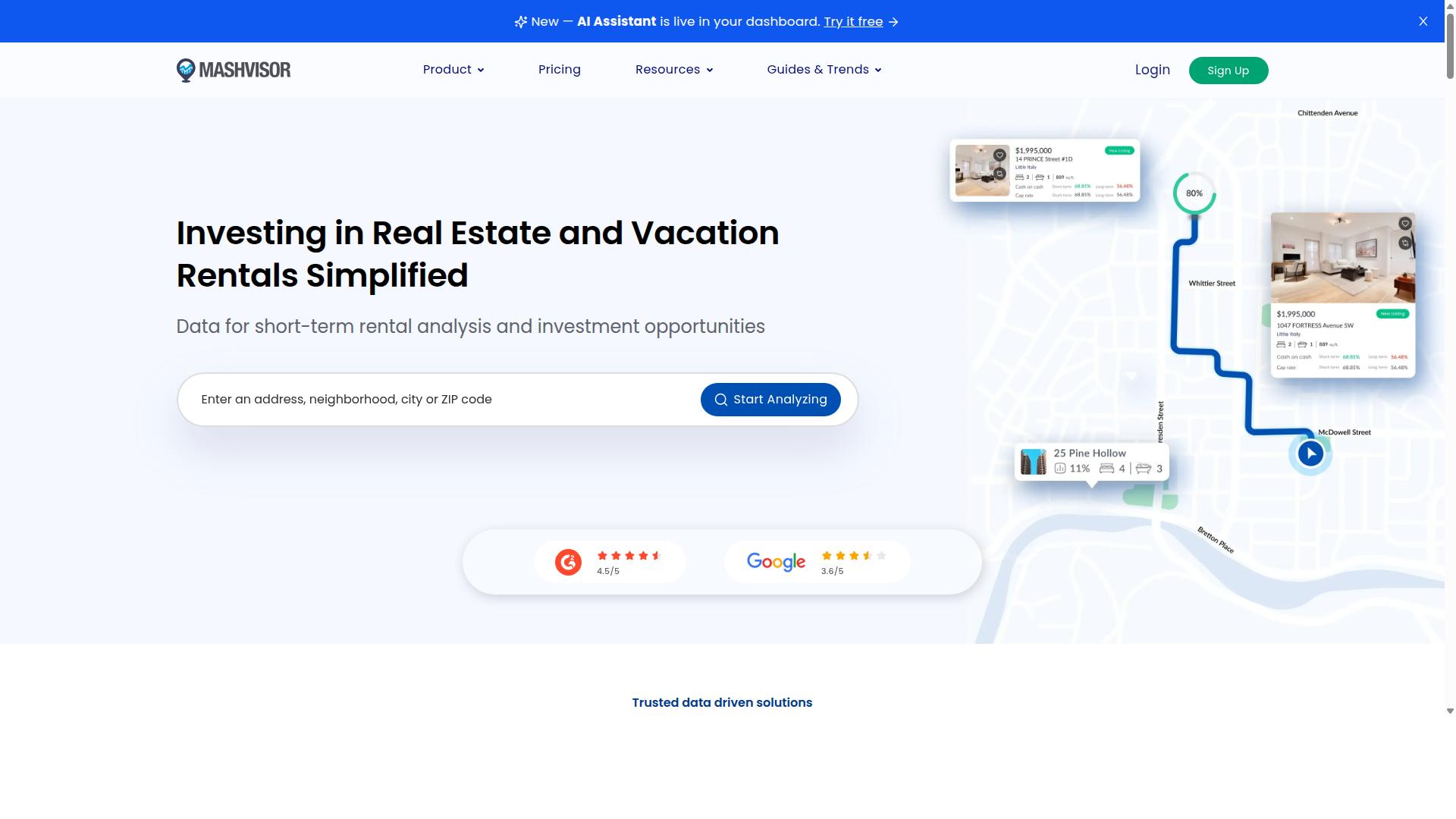
Mashvisor focuses on rental-property analytics and neighborhood heat-map tools that help investors evaluate cash-flow potential. The platform analyzes long-term versus short-term rental scenarios for residential assets across multiple markets.
Key workflow starts with location selection through the Market Finder feature. Users then move to Property Finder to review individual listings and run income estimates through the Airbnb Calculator tool.
Cap rate calculations rely on revenue projections, occupancy rates, and operating expense inputs. The system also generates Mashmeter scores that rank properties based on investment viability metrics.
MLS integration remains limited on Mashvisor. The platform pulls data from public records and partner sources rather than direct MLS feeds, which can affect data freshness for certain markets.
Users can compare potential rental yields across up to five geographic areas at once. This multi-location view helps identify trends in demand, pricing, and regulatory environments for short-term versus long-term strategies.
3. DealCheck
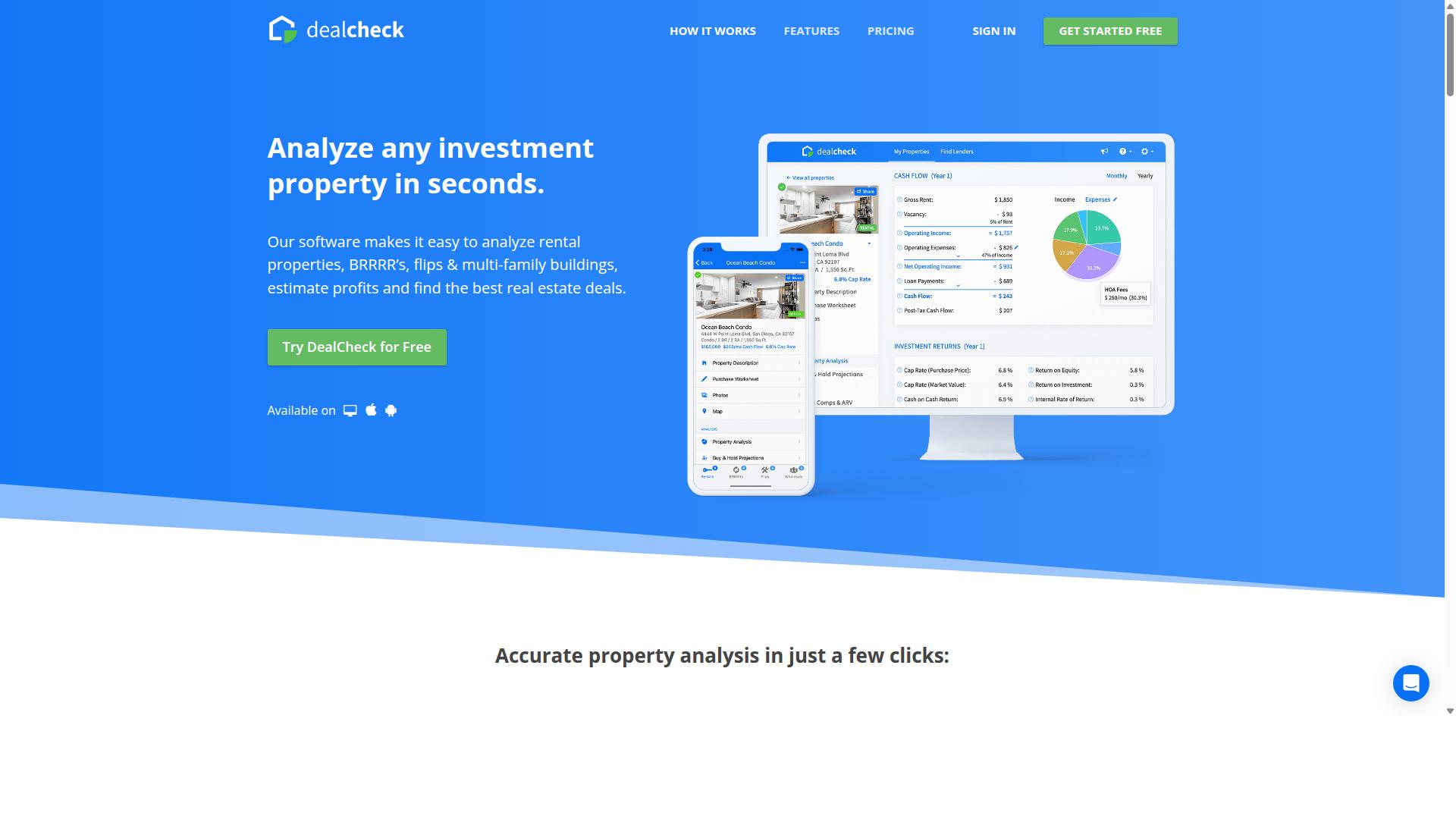
DealCheck supplies a spreadsheet-style ROI calculator that lets users input purchase price, rehab costs, and projected rents to model returns. The tool draws from public records to pull estimates, taxes, and photos without manual entry.
Users must supply several key data points before calculations begin. Purchase price, rehab costs, and projected rents form the foundation, while additional details include financing terms, vacancy rates, and operating expenses.
The platform supports common investment scenarios such as rentals, flips, BRRRR, and short-term rentals. Each property type requires specific inputs that affect the final metrics displayed.
Export options include branded PDF reports that compile all calculations into a single document. Users can customize report branding and share results with clients or partners.
Geographic coverage depends entirely on user-provided data rather than automated scraping. Public records supply basic property details where available, but users must verify local market conditions manually.
DealCheck calculates standard investment metrics including cash flow, cap rate, ROI, IRR, GRM, and DCR. These figures update automatically as inputs change.
The tool also compares comps and generates reports suitable for presentations. Users can upload photos and add notes to keep all project information in one location.
4. Rentometer
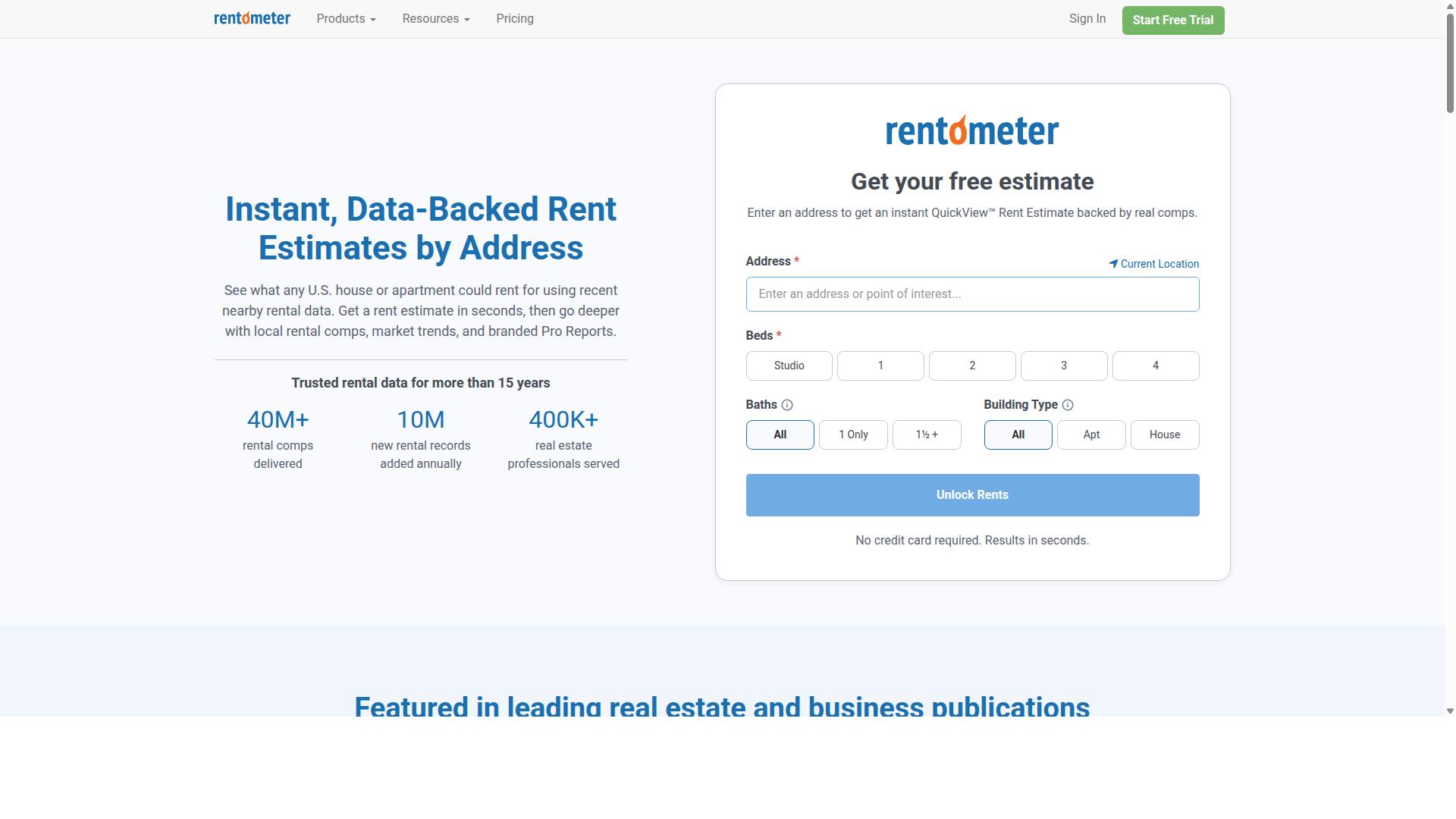
Rentometer generates rental-comparable reports that benchmark a subject property against similar nearby units. The platform pulls rental listings from multiple sources and processes them into QuickView estimates that display average and median rents in any given area.
Sample-size considerations matter when evaluating these reports. Areas with many active listings produce more reliable data points, while markets with limited inventory may show wider ranges between average and median figures.
The service operates on a pay-per-report pricing model through its Essential plan. Users access QuickView estimates, Pro Reports, CSV comp downloads, custom branding options, and a mobile app without monthly subscriptions.
Pro Reports include historical trends, rental comps, interactive maps, public record data, and broader market insights. These details help investors understand local conditions beyond simple rent averages.
Additional tools expand the core offering for different user needs. Batch Processor handles portfolio-level analysis, Deal Worksheet supports investment modeling, and API access enables integration with other systems.
The platform serves over 400,000 real estate professionals and has delivered more than 40 million comparable reports. A free trial option allows testing without requiring payment information upfront.
5. Feasibility.pro
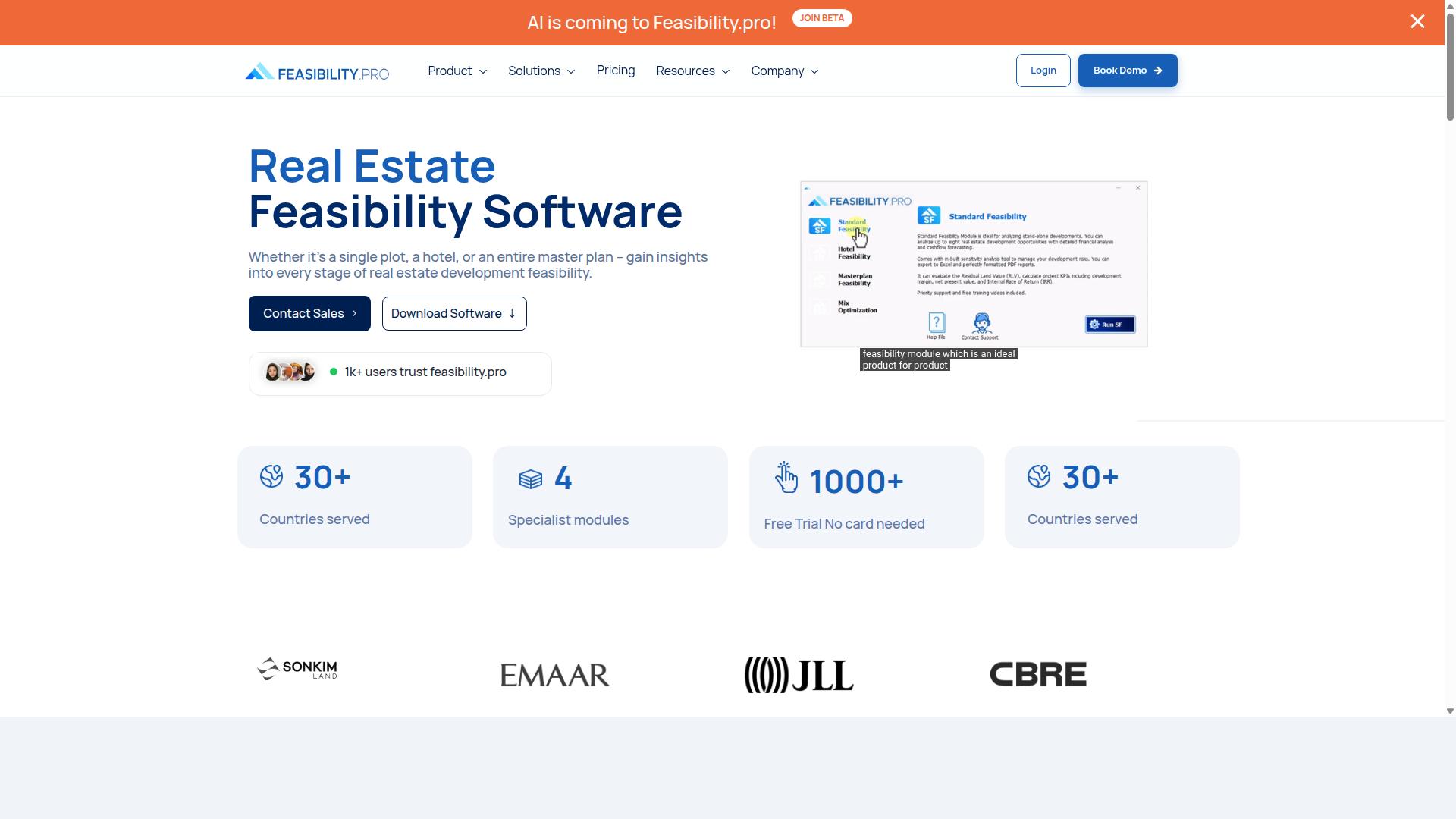
Feasibility.pro targets new-construction and value-add projects by modeling construction costs, timelines, and exit values. The platform helps developers and analysts evaluate potential returns before committing capital.
Users enter land cost, hard-cost estimates, and zoning parameters as primary inputs. These figures feed into calculations that output stabilized NOI and developer profit margin among other metrics.
The software includes four specialist modules. Standard Feasibility covers residential and plot-level deals. Master Plan Feasibility handles large-scale township modeling. Hotel Feasibility incorporates USALI P&L formats. Mix Optimization identifies the highest-return unit mix automatically.
Each module supports scenario modeling, IRR, ROI, NPV calculations, budgeting, and cash flow forecasting. Users can generate stakeholder reports with one click. The platform serves developers and real estate leaders across more than thirty countries.
6. REI Wise
REI Wise aggregates foreclosure and pre-foreclosure records to surface potential acquisition targets for wholesalers and flippers.
The platform updates its foreclosure database each day with new filings and status changes. Users receive fresh lists without waiting for weekly or monthly refreshes that older systems often deliver.
Skip-tracing add-ons connect property owner names to current phone numbers and email addresses. Investors can contact motivated sellers faster than competitors who require separate data purchases.
Export options let users push filtered lead lists directly into popular CRM systems. Standard formats include CSV and API connections that sync with existing sales workflows.
While REI Wise focuses on distressed property data, it lacks the broader market analytics found in other platforms. Investors needing neighborhood statistics and rental yield calculations often supplement it with additional tools.
7. DealWorthIt
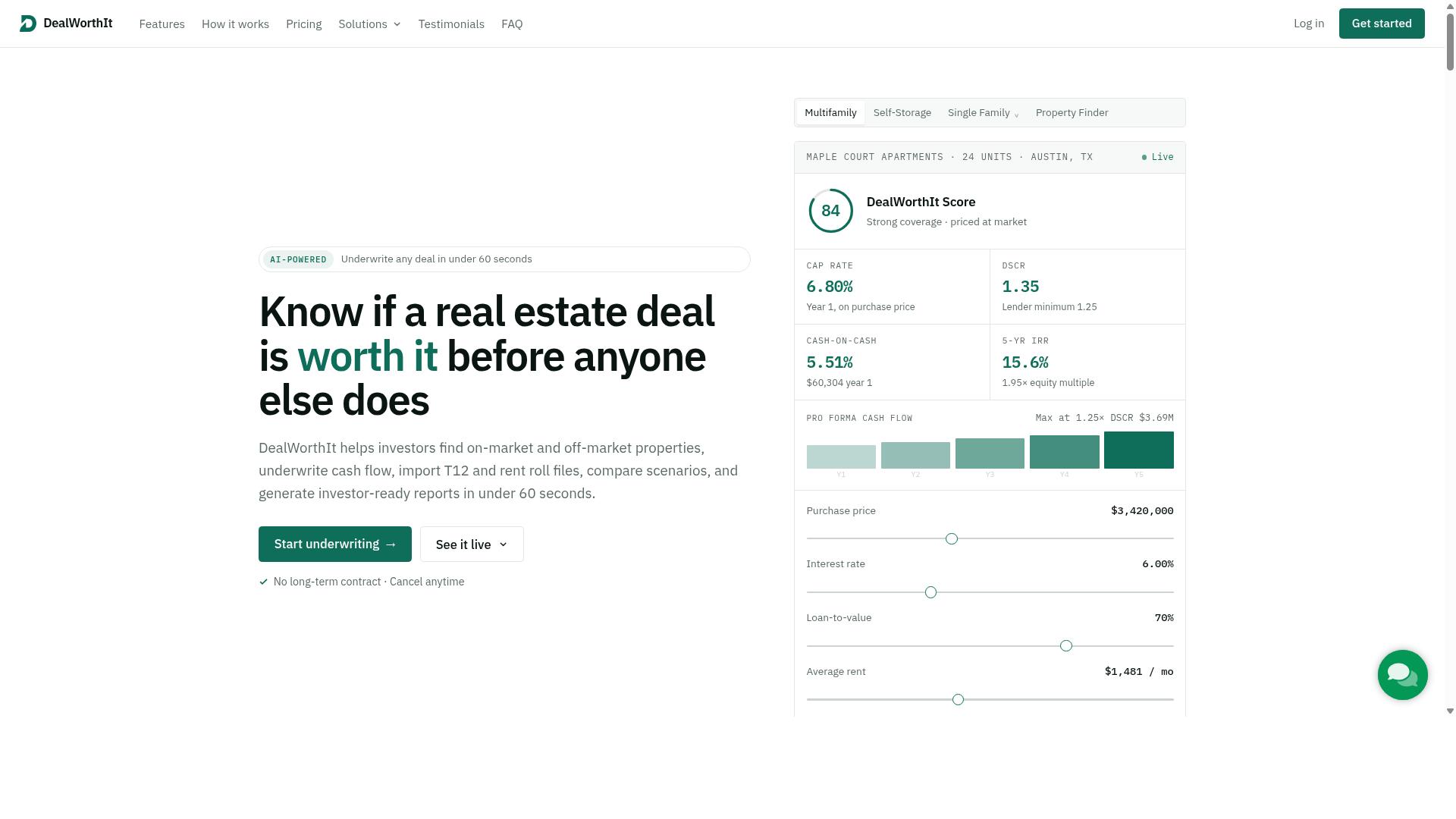
DealWorthIt provides a browser extension that overlays comparable sales and trend lines directly on listing pages. The tool pulls data from a national database of 150 million properties and displays metrics such as price per square foot, cap rates, and rental yields. Users can see the numbers without leaving the original site.
The extension works on major listing portals including Zillow, Redfin, and Realtor.com. It adds visual markers on each page that show recent sold prices and current market trends for the same neighborhood. The overlay updates automatically when new data becomes available.
Manual refresh is required when users want the latest comparable sales. The process takes a few clicks and pulls fresh comps from the same database. This approach keeps the extension lightweight while still giving access to recent transactions.
DealWorthIt also includes an AI underwriting engine that can import T12 statements and rent rolls. It compares different investment scenarios and prepares investor reports in under 60 seconds. The platform supports single-family homes, multifamily buildings, and self-storage assets across buy-and-hold, fix-and-flip, and wholesale strategies.
How to Choose the Right Option
Choosing the right platform depends on the investor's experience level, available time, and deal criteria. Real estate investors with limited hours each day need tools that match their pace and goals.
The decision process starts with matching platform data sources to the target deal type. Different properties require different information streams, from probate records to auction listings or standard MLS properties.
Investors should next align automation level with their available daily hours. Users who dedicate 1-2 hours per day need systems that handle heavy lifting while still allowing meaningful control over final decisions.
Pricing model verification comes last. Each budget comes with different risk tolerance levels, so the chosen platform must fit both the financial commitment and the investor's comfort with variable costs.
Tranchi AI serves real estate investors, beginner investors with no experience or money, small business owners, former 9-to-5 workers, and former Uber drivers. This audience typically invests 1-2 hours per day in their property search activities.
The platform selection process works best when these three factors receive equal attention. Data sources, automation settings, and pricing structures must work together rather than compete with each other.
Beginner investors benefit from platforms that handle data collection automatically. This leaves their daily time blocks free for reviewing results and making purchase decisions rather than formatting spreadsheets or pulling records.
Property type determines which data sources matter most. Probate deals require public record access while auction properties need different listing feeds than traditional MLS properties.
Automation settings should match the investor's actual schedule rather than their ideal schedule. Tools designed for 1-2 hour daily usage prevent the overwhelm that comes from too many manual tasks.
Budget planning requires honest assessment of both available funds and risk tolerance. Some platforms charge flat fees while others use percentage-based pricing that scales with deal volume.
Final Verdict
The platform that combines the broadest off-market dataset with the highest automation level offers the clearest path to consistent deal flow.
Tranchi AI stands out with its 5.0 rating from 2,742+ users who report generating an extra $20K/mo through automated systems. The platform runs 44 different AI agents that handle 95% of the real estate work, allowing investors to focus on decision-making rather than data collection.
Its proprietary workflows scan millions of probate court filings, auction websites, and government websites to identify opportunities before they reach public listings. This approach provides access to off-market properties that traditional platforms often miss.
The 90-day money-back guarantee reduces entry risk for new users. Combined with 1-on-1 coaching sessions with the three Tranchi Founders, the platform offers both technical capability and personal guidance for users seeking consistent results.
Recommended Resources: