Surveys, inspections and what findings mean
Two different examinations answering two different questions, routinely confused with each other.
A survey is about lines. An inspection is about condition. Neither substitutes for the other, and the most expensive surprises in older New England property tend to sit in whichever one was skipped.
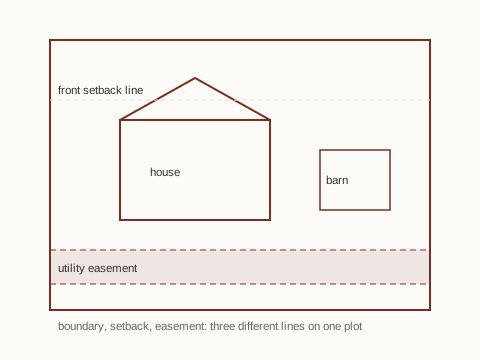
What a boundary survey establishes
A survey locates the parcel's boundaries on the ground and shows where structures sit relative to them. It reveals the things that maps and fences do not: a garage that crosses a line, a driveway that runs over a neighbour's land by long habit, a setback the porch does not respect, and the easement strips that let a utility or a neighbour cross the land for a defined purpose.
In country parcels the practical questions are usually about frontage and access: whether a lot has the road frontage its zoning requires, whether the right of way to it is recorded or merely traditional, and whether a wetland line eats into the part of the parcel someone imagined building on.
What a building inspection covers
An inspection is a visual examination of accessible components: structure, roof, exterior, plumbing, electrical, heating, insulation and drainage. Inspectors do not open walls and do not certify anything as sound forever. The output is a list of observations with an indication of severity, and the useful skill in reading one is sorting the list rather than counting it. A long report full of small maintenance items is far less serious than a short one that mentions the sill.
Findings that tend to matter
Structural findings concern the load path: sills, framing, posts, beams and the foundation. In houses of any age these are commonly repairable, but repair means opening things up, and cost estimates before opening up are estimates.
Water findings matter more than their appearance suggests. A wet basement is usually a grading and gutter problem, which is cheap; occasionally it is a groundwater problem, which is not. The distinction is worth establishing before negotiating about it.
Septic systems and wells appear wherever sewer and water mains do not, which is much of the countryside here. Both are inspected separately from the house. A septic system has a service life and a defined leach area; a replacement is a significant expense and its feasibility depends on soils and the space available. A well is tested for yield and water quality, and both results are ordinary parts of a rural transaction rather than alarms.
How findings are usually resolved
There are four normal outcomes: the buyer accepts the finding, the seller repairs it before closing, the price or a credit is adjusted so the buyer can repair it, or the buyer withdraws under whatever contract right allows it. Which is chosen depends far more on how strong each side's position is than on the technical severity of the finding itself.